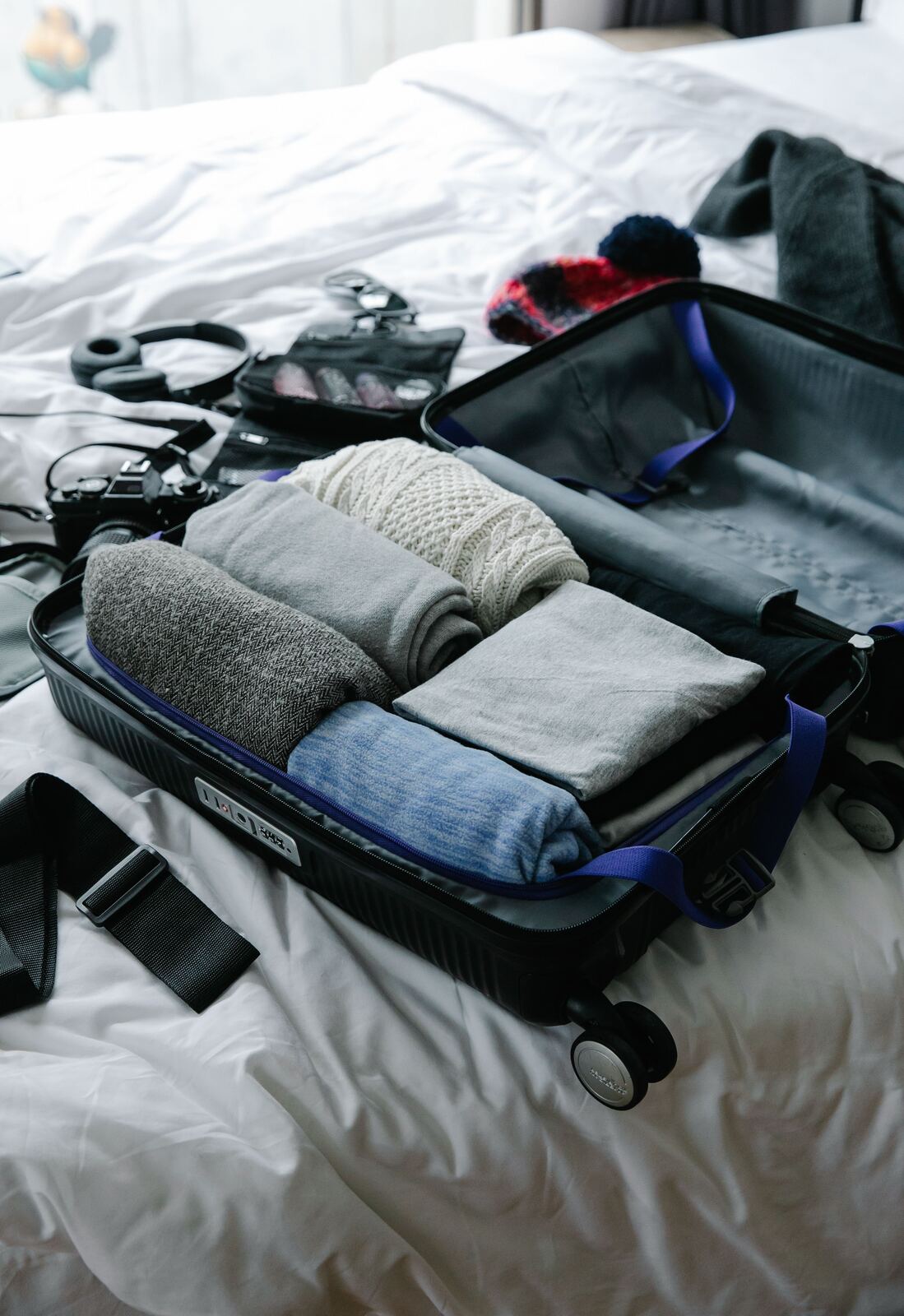
Most cruise packing lists are copy-pasted from each other and read like a generic vacation checklist with "sunscreen" and "swimsuit" at the top. The actual problem first-time cruisers run into isn't forgetting sunscreen — it's underestimating how little storage a standard cabin gives you, and not knowing which small items save an entire day of frustration on board.
This list is organized the way you'll actually pack: by what goes in your carry-on bag (because checked luggage doesn't arrive at your cabin until several hours after boarding), what goes in your suitcase, and the small items that make the difference between a smooth week and a series of minor annoyances.
Carry-on bag: pack this separately from checked luggage
Your checked bags are collected at the terminal and delivered to your cabin door later in the afternoon — often 3 to 6 hours after you board. Anything you'll need before then goes in a carry-on you keep with you.
- Passport / travel documents and printed boarding pass, even if you have the app.
- Swimsuit and a change of clothes — pools and lido deck are open from boarding, your cabin isn't.
- Medication for the full trip, in original packaging, never in checked luggage.
- Phone charger and a portable battery pack — outlets in embarkation lounges are scarce.
- A refillable water bottle (empty through security, most terminals have refill stations).
Cabin storage reality check
A standard interior or oceanview cabin gives you a narrow closet, a few drawers, and shelf space under the bathroom sink — roughly comparable to a small hotel room, not an apartment. Pack accordingly:
- A collapsible packing cube set keeps clothing organized in drawers that are shallower than they look.
- Magnetic hooks (cabin walls are metal) — this is the single most-recommended item by repeat cruisers, and it's rarely on generic packing lists. Hang hats, bags, and lanyards without using drawer space.
- A hanging toiletry organizer for the bathroom, which typically has minimal counter space.
Packing cubes, magnetic hooks, and a compact toiletry organizer — this is exactly the kind of small, inexpensive gear that's genuinely worth buying before a first cruise. [Replace this box with your actual Amazon Associates links once approved — link directly to the specific products you recommend, not the Amazon homepage.]
Example: Cabin Organization Kit →What NOT to pack
Cruise lines confiscate items at the security checkpoint on embarkation day, and policies differ slightly between lines — but these are banned almost everywhere:
- Irons and steamers (fire risk — most cabins don't have outlets rated for them anyway).
- Power strips or extension cords without surge protection (surge-protected, non-grounded strips are usually fine — check your specific line's policy before packing one).
- Candles, incense, and anything with an open flame.
- Weapons, including pocket knives over a small blade length.
- Illegal drugs and, on many lines, large quantities of alcohol beyond a small per-cabin allowance.
Check your specific cruise line's prohibited items list before you pack — Carnival, Royal Caribbean, and Norwegian each publish theirs and they're updated periodically.
If a delayed flight makes you miss embarkation, or checked luggage doesn't show up, travel insurance with trip-delay and baggage coverage is the difference between a bad day and a ruined vacation. Compare a couple of policies before your final payment date.
Example: Compare cruise travel insurance →Clothing: pack for the itinerary, not "a beach vacation"
Caribbean and Bahamas itineraries are casual almost every night — shorts and t-shirts during the day, resort casual in the evening. Alaska and Northern Europe itineraries need layers: a waterproof jacket, closed shoes, and at least one warm layer even in summer months. If your cruise includes a "formal night" (common on longer cruises, less common on 3-5 night itineraries), one slightly dressier outfit covers it — you do not need to rent a tuxedo for a first cruise.
| Item | Why it matters |
|---|---|
| Motion sickness bands or medication | Even good sailors can feel it on embarkation day in port or during rough seas — cheap insurance |
| Lanyard or crossbody bag for your cabin key card | The card is also your ID and payment method on board — losing it mid-cruise is a real hassle |
| A day bag for excursions | You won't want to carry your main luggage off the ship in port |
| Reusable water bottle | Refill stations are available; bottled water on board can be expensive |
The bottom line
Pack your documents, medication, and a swimsuit in your carry-on. Bring cabin organization gear you wouldn't think to pack for a hotel stay. Check your specific cruise line's banned items list. And pack layers if you're not sailing the Caribbean. Everything else is standard vacation packing you already know how to do.