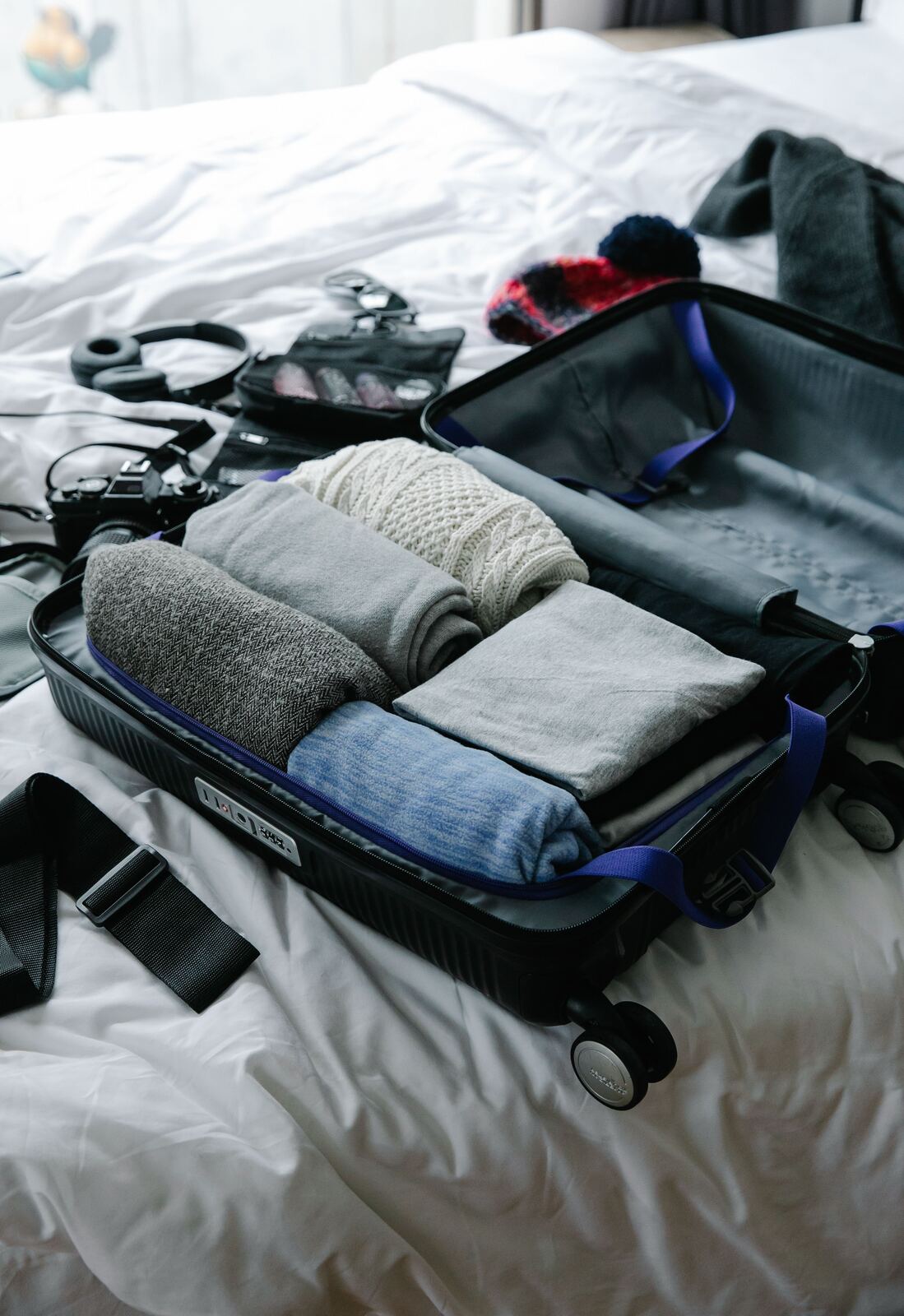
A standard interior cruise cabin runs 160-180 square feet, and even a balcony cabin rarely clears 200 square feet including the balcony itself. None of that is huge for two people living out of suitcases for a week, and the cabin's built-in storage — a shallow dresser, a narrow closet, a few open shelves — was never designed for how much most people actually pack. The fixes below aren't clever life-hack fluff; they're specific products and habits that solve the two real problems: not enough flat storage, and clutter that makes a small room feel smaller.
The core setup, with real prices
| Item | Typical price | What it solves | Notes |
|---|---|---|---|
| Magnetic hooks (6-10 pack) | ~$15–19 | Hanging bags, hats, lanyards, wet swimsuits | Buy hooks rated for at least 25 lbs; a 75-lb-rated 6-pack runs about $19 |
| Over-the-door mesh organizer (15-pocket) | ~$18–23 | Toiletries, sunscreen, medications, small electronics | Hangs on the bathroom or closet door in under a minute; frees up the tiny bathroom shelves |
| Magnetic over-door organizer variant | Similar range | Same as above, for cabins where the door itself is metal | Repositionable without hooks — useful if your door won't take a standard hanger |
| Packing cubes (set of 5) | ~$25–30 | Replaces the shallow dresser drawers entirely | Keep clothes zipped in the cube and set the whole cube in the drawer — no refolding all week |
| Collapsible mesh hamper | ~$1–5 | Separates worn clothes from packed clothes | Packs flat; some cruisers just use a dollar-store version |
| Small power strip (non-surge-protected) | ~$10–15 | Cabins often have just 1-2 outlets for 2+ people's devices | Must be non-surge-protected — most lines prohibit surge protectors and power strips with surge protection for safety reasons; check your line's current policy before packing one |
The magnetic hook + over-door organizer combo solves most of a small cabin's storage problems for well under $40 total, and both pack flat in a suitcase. [Replace this box with your actual cabin organizer affiliate link once approved.]
Example: Cruise cabin organizer bundle →Space you're probably not using
| Space | What it's good for | Notes |
|---|---|---|
| Under the bed | Empty suitcases, extra shoes, bulky items | Most cruise beds have real clearance underneath — check on embarkation day before unpacking |
| Closet shelf tops | Hats, sunscreen, items you won't need daily | Often overlooked because it's above eye level in a small closet |
| Balcony cabin's extra drawer/shelf | Bulkier clothing items | Balcony cabins typically have more built-in storage than interior or oceanview categories |
| Bathroom door (inside face) | Toiletries via the mesh organizer | Cruise bathrooms often have almost no shelf space of their own |
Packing strategy that reduces what you need to store
| Strategy | Why it reduces cabin clutter |
|---|---|
| Pack versatile pieces that work for both day and dinner | Fewer total garments means less to hang, fold, or store in the first place |
| Wash small items in the sink with travel detergent packets | Reduces how many days of clothing you need to pack and store at once |
| Use packing cubes as the drawer system, not just for the suitcase | Skip refolding into shallow drawers entirely — the cube becomes the drawer |
| Leave the empty suitcase under the bed all week | Frees the closet floor, the one flat surface most interior cabins have |
What to skip
Adhesive hooks and command strips are a waste of luggage space on a ship — cabin surfaces are metal, and magnets simply work better and come off without residue. Full-size laundry bags and large freestanding organizers also tend to eat more cabin floor space than they save; the over-door and magnetic options exist specifically because they use vertical space that's otherwise wasted.
The bottom line
A cabin under 200 square feet doesn't need an elaborate system — it needs magnetic hooks, one over-door organizer, and packing cubes used as your drawer system, all of which pack flat and cost under $40 combined. Everything else on this list is a bonus, not a requirement.