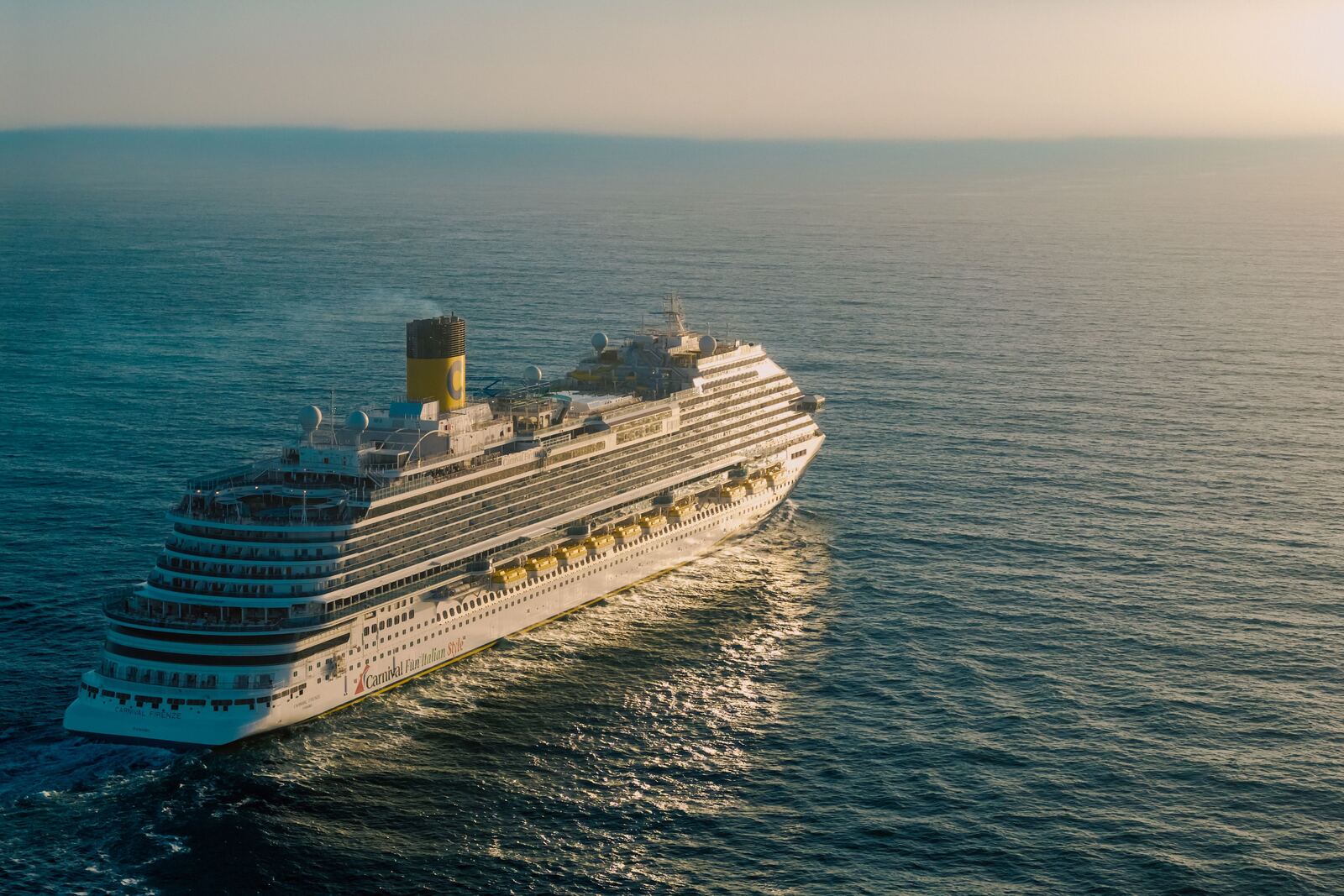
Carnival and Royal Caribbean are the two cruise lines almost every first-timer ends up choosing between, and almost every comparison article you'll find online is a vague list of adjectives — "Carnival is more budget," "Royal Caribbean is more premium" — without a single real number attached. That's not useful when you're actually trying to decide where to put a $2,000+ deposit.
Below is every number that actually matters: base fares, gratuities, drink package prices, specialty dining costs, cabin square footage, kids club structures, loyalty program payoffs, and the one signature onboard feature each line built its brand around. Then a straight verdict by traveler type, because "it depends" isn't an answer.
Fleet: size, age, and the ships that actually matter
Both lines operate roughly the same number of ships (high-20s), but the ceiling is different. Royal Caribbean owns the title of biggest ship in the world outright, and it isn't close.
| Carnival | Royal Caribbean | |
|---|---|---|
| Largest ship | Carnival Jubilee / Mardi Gras (Excel Class, ~180,000 GT) | Icon of the Seas (~250,000+ GT, ~10,000 guests + crew) — largest cruise ship in the world |
| Newest class | Excel Class (Mardi Gras, Carnival Celebration, Carnival Jubilee — 2020 to 2023), LNG-powered | Icon Class (Icon of the Seas 2024, Star of the Seas 2025); Legend of the Seas due 2026 |
| Signature ship feature | BOLT: Ultimate Sea Coaster — first rollercoaster at sea, on 3 ships only | Ultimate Abyss — 10-story dry slide, tallest slide at sea, on 5 ships |
| Overall fleet age | Mixed — several ships from the 2000s alongside the newest Excel Class | Skews newer on average, with an aggressive mega-ship replacement cycle |
What this means for you: if "biggest ship experience" is the whole point of the trip, Royal Caribbean's Icon Class ships are in a different league — indoor/outdoor neighborhoods, 40+ dining and drink venues, and a water park all on one ship. If you want a fast, thrill-ride feature without needing the largest ship afloat, BOLT is unique to Carnival and costs $15 per ride (Ultimate Abyss is free but only a slide, not a powered ride).
Real 2026 pricing: base fare for a 7-night Caribbean cruise
This is where the two lines diverge the most, and it's the number every generic comparison article skips.
| Ship / sailing | Peak season (July 2026) | Shoulder season (Sept–Oct 2026) |
|---|---|---|
| Carnival Liberty, 7 nights | ~$859 pp | ~$619 pp |
| Carnival Celebration, 7 nights | ~$984 pp | ~$659 pp |
| Royal Caribbean Harmony of the Seas, 7 nights | — | ~$994 pp |
| Royal Caribbean Star of the Seas, 7 nights | ~$1,849 pp | ~$1,313 pp |
The pattern holds across nearly every sailing pair: Carnival's base fare typically runs 30-45% cheaper than Royal Caribbean for a comparable itinerary, and the gap is largest on Royal Caribbean's newest mega-ships, which command a real premium over its older vessels like Harmony or Brilliance.
| Mandatory daily gratuity (per guest, per day) | Carnival | Royal Caribbean |
|---|---|---|
| Standard stateroom | $17.00 | $18.50 |
| Suite | $19.00 | $21.00 |
On a 7-night cruise for two people in a standard cabin, that's roughly $238 in gratuities on Carnival versus $259 on Royal Caribbean — a smaller gap than the base fare difference, but it stacks on top of it.
Base fare is never the real cost of a cruise once gratuities, drink packages, and excursions are added — comparing live prices across both lines for your actual dates is the only way to see the real gap. [Replace this box with your actual TravelPayouts or CruiseDirect affiliate link once approved.]
Example: Compare live cruise prices →Drink packages: the cost that changes the math
Carnival's cheaper base fare narrows fast if you're planning to drink, because its package is both more expensive per day and capped.
| Carnival CHEERS! | Royal Caribbean Deluxe Beverage Package | |
|---|---|---|
| Price per day | $82–84 prepaid, $88–90 onboard | ~$72 median (range $55–120 depending on ship) |
| Daily drink limit | 15 alcoholic drinks (each $20 or under) per 24 hours | No daily limit |
| Also includes | Unlimited soda, specialty coffee, juice, bottled water | Unlimited soda, specialty coffee, juice, bottled water |
| Who must buy it | Every guest 21+ in the cabin | Every guest 21+ in the cabin |
The real-world effect: Royal Caribbean's package is both cheaper per day and has no drink cap, which makes it the better value if you drink more than 4-5 drinks a day. Carnival's cap rarely matters for casual drinkers but is a real limitation for anyone planning a genuine "all-inclusive" week.
Dining: what's free and what costs extra
Both lines include a full three-course dinner in the main dining room every night at no extra charge — this part is basically a wash. The gap shows up in specialty (paid) dining.
| Carnival | Royal Caribbean | |
|---|---|---|
| Main dining room | Included in cruise fare, nightly, assigned or flexible seating | Included in cruise fare, nightly, assigned seating with same server/tablemates |
| Steakhouse (specialty) | $62.40 per adult, $18 per child 11 & under — 3-course meal, 20% service charge included | Chops Grille: $32 per person |
Carnival's steakhouse is nearly double the price of Royal Caribbean's Chops Grille for a broadly comparable 3-course experience — if specialty dining is part of your plan, that difference adds up fast across a 7-night cruise with 2-3 specialty dinners.
Cabins: the square footage nobody puts in writing
Neither line publishes a clean side-by-side, so here's the actual range pulled from both lines' current deck plans.
| Cabin type | Carnival | Royal Caribbean |
|---|---|---|
| Interior (standard) | ~160–220 sq ft | ~156–180 sq ft (newest ships trend smaller, e.g. Icon of the Seas at 156 sq ft) |
| Balcony (standard) | 185–300 sq ft living area + 35–75 sq ft balcony | ~180–204 sq ft living area + ~50 sq ft balcony |
The two are closer than either brand's marketing suggests — in a direct match-up, Carnival's inside cabin is often only slightly smaller than Royal Caribbean's balcony guarantee cabin. If square footage in the room itself is your priority, look at the specific ship and cabin category rather than assuming one line is bigger across the board.
Kids and family costs
Both lines split kids' programs into four age bands, but the on-ship experience and the total trip cost differ more than the age brackets suggest.
| Carnival Camp Ocean | Royal Caribbean Adventure Ocean | |
|---|---|---|
| Age groups | Penguins 2–5, Stingrays 6–8, Sharks 9–11, then Circle "C" 12–14, Club O2 15–17 | 3–5, 6–8, 9–11, 12–17 |
| Program depth | Solid for younger kids; smaller spaces, less varied programming | Larger, more activity-packed, especially on Oasis/Icon-class ships — rock climbing, surf simulator, ice skating |
| Family of 4, 7-night Caribbean, total trip cost (fare + gratuities + typical onboard spend) | ~$3,200–$5,400 | ~$3,800–$6,600 |
The trade-off: Royal Caribbean's kids clubs are genuinely more impressive on its biggest ships, but that comes bundled with a higher total trip cost. On Carnival's smaller/older ships versus Royal Caribbean's smaller/older ships, the program gap narrows significantly — the difference is really about the newest mega-ships on each side.
Loyalty programs: what repeat cruisers actually get
This matters less for a first cruise, but it's worth knowing before you pick a line you might stick with for years.
| Carnival | Royal Caribbean Crown & Anchor Society | |
|---|---|---|
| Structure | VIFP Club retiring June 1, 2026, replaced by spend-based "Carnival Rewards" (3 points per dollar spent); status must be requalified every 2 years | 6 tiers by cumulative cruise nights: Gold, Platinum, Emerald, Diamond, Diamond Plus, Pinnacle Club (700+ nights) |
| Top-tier perks | Priority boarding, free laundry, priority dining — no free-cruise reward at any tier historically | Free drinks (4-6/day at top tiers), free WiFi hours, spa discounts, private lounges, and a complimentary cruise at Pinnacle Club |
Royal Caribbean's program has a clearer, more valuable long-term payoff — including the one perk Carnival has never matched: a free cruise at its top loyalty tier. Carnival's move to a spend-based, non-lifetime system in 2026 makes it less attractive for occasional cruisers who want status to stick.
Home ports and itineraries
Carnival sails from more U.S. homeports overall, including smaller regional ports (Mobile AL, Norfolk VA, New Orleans LA, Galveston TX), which matters if you want to drive to your ship instead of flying. Its itineraries also lean more heavily into Southern Caribbean stops — Aruba, Bonaire, Curaçao, Barbados — in addition to the standard Western Caribbean run to Cozumel and Grand Cayman.
Royal Caribbean's Caribbean sailings concentrate more around Florida (Miami, Port Canaveral, Fort Lauderdale) plus a few other hubs like Tampa and San Juan, but it has the edge for anyone eventually looking beyond the Caribbean — Mediterranean, Antarctica, and South Pacific itineraries are more developed on Royal Caribbean than on Carnival.
Whichever line you pick, a delayed flight or a missed embarkation shouldn't turn into a canceled vacation — compare a couple of cruise-specific travel insurance policies before your final payment is due.
Example: Compare cruise travel insurance →The bottom line, by traveler type
| You are... | Go with | Why |
|---|---|---|
| Booking your very first cruise on a tight budget | Carnival | 30-45% cheaper base fare, more departure ports near you, smaller learning curve for a first trip |
| Traveling with kids on the newest ships | Royal Caribbean | Deeper, more activity-packed kids clubs on Oasis/Icon-class ships — if you're willing to pay for it |
| Planning to drink a lot on board | Royal Caribbean | No daily drink cap, and its package is cheaper per day than Carnival's |
| Chasing the biggest, newest mega-ship experience | Royal Caribbean | Icon of the Seas and Star of the Seas are in a category Carnival doesn't currently compete in |
| Want a thrill ride, not just a slide | Carnival | BOLT is a genuine powered rollercoaster; Ultimate Abyss is a free but passive slide |
| Thinking about cruising regularly for years | Royal Caribbean | Crown & Anchor Society's top-tier free cruise reward beats anything in Carnival's program |
Neither line is objectively "better" — they're built for different trips. Carnival wins on price and accessibility, which is exactly what most first-timers actually need. Royal Caribbean wins on scale, drink-package value, and long-term loyalty payoff, which matters more once you already know you love cruising. If this is genuinely your first cruise and you're not sure you'll do it again, the lower financial commitment on Carnival is the safer place to find out.