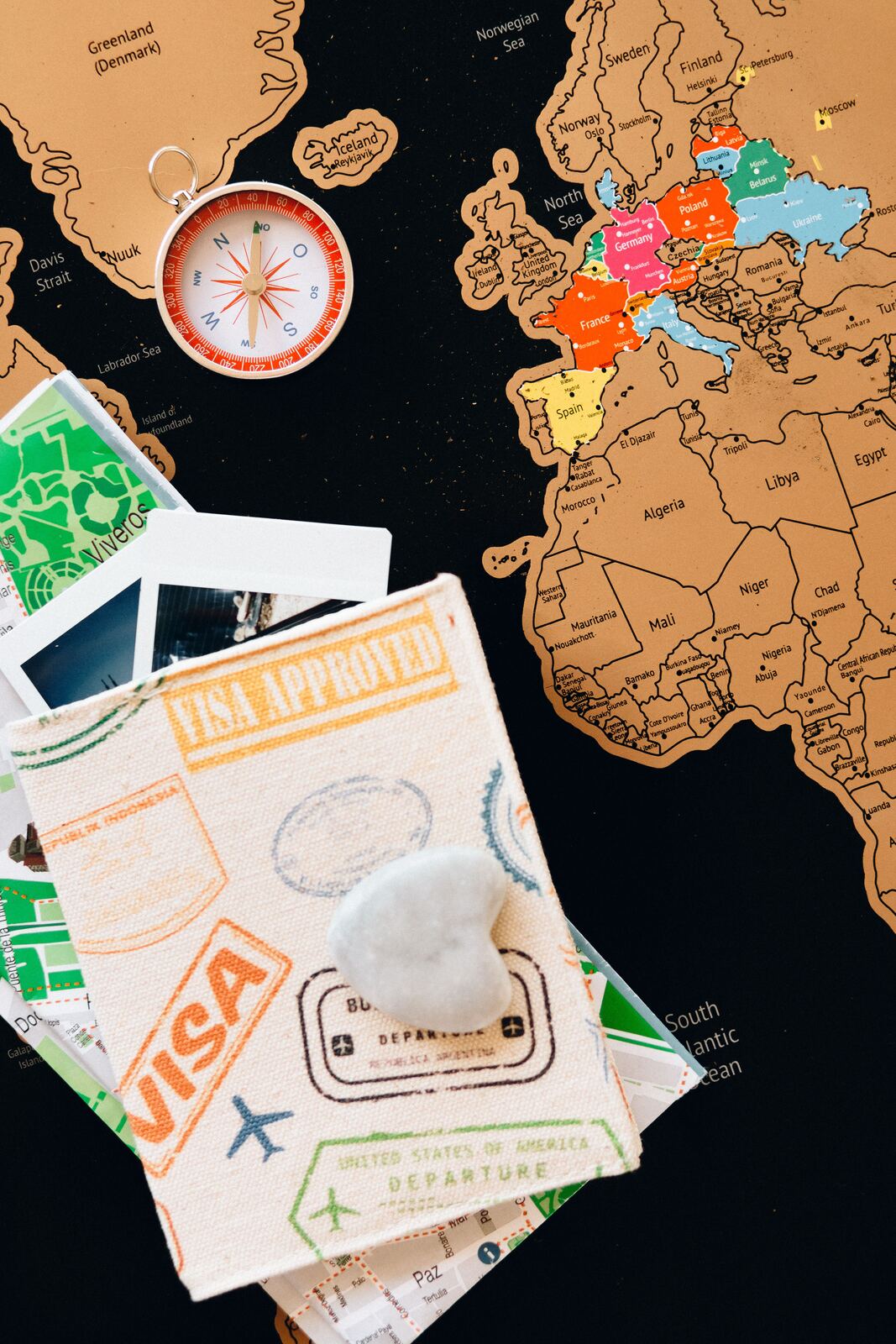
Visa requirements for a Caribbean cruise depend on three separate things: your nationality, whether your cruise is "closed-loop" (starts and ends at the same U.S. port), and which specific islands your itinerary visits. Getting any one of these wrong can mean being denied boarding at the terminal — and cruise lines do not refund fares for missing or incorrect documentation. Here's how the requirements actually break down.
What "closed-loop" means, and why it matters
A closed-loop cruise departs from and returns to the same U.S. port without a passport-requiring destination in between. This distinction is the single biggest factor in what documents you'll need.
| Cruise type | Definition | Document implication |
|---|---|---|
| Closed-loop | Same U.S. port for embarkation and disembarkation | U.S. citizens may use a birth certificate + photo ID, passport card, or Enhanced Driver's License instead of a passport book, for most islands |
| Open-jaw / one-way | Different embarkation and disembarkation ports (e.g., different countries) | A passport book is effectively required regardless of citizenship |
Requirements for U.S. citizens
| Scenario | What you need |
|---|---|
| Closed-loop cruise to the Bahamas, Jamaica, Cayman Islands, most Eastern/Western Caribbean stops | Government-issued photo ID + proof of citizenship (birth certificate), passport card, or Enhanced Driver's License — passport book not legally required, but strongly recommended |
| Any cruise visiting Barbados, Saint Lucia, Martinique, or Guadeloupe | Valid passport book required regardless of cruise type |
| Cruise visiting the French West Indies (Guadeloupe, Martinique, Saint Martin, Saint Barts) | Valid passport book required regardless of departure port |
| Open-jaw or one-way itinerary | Valid passport book required |
| Any scenario involving a missed ship or medical emergency | A passport book is the only document that guarantees a fast route home — non-passport documents can significantly complicate emergency air travel |
Even when a passport isn't strictly required, travel experts consistently recommend carrying one on any cruise — it's the only document that reliably gets you home quickly if you miss the ship or need emergency travel from a foreign port. [Replace this box with your actual passport/travel document service affiliate link once approved.]
Example: Passport application & renewal services →Requirements for Canadian citizens
| Scenario | What you need |
|---|---|
| Closed-loop cruise from a U.S. port | Similar rules to U.S. citizens under the Western Hemisphere Travel Initiative — valid passport strongly recommended, some non-passport documents accepted for most islands |
| Cruise visiting French West Indies, Barbados, Saint Lucia | Valid passport required, same as U.S. citizens |
| Boarding a cruise in the U.S. | No ESTA needed for Canadian citizens (exempt from the Visa Waiver Program's ESTA requirement) |
Requirements for non-U.S., non-Canadian citizens
This is the category where requirements vary the most, and where checking your specific nationality against your specific itinerary matters most.
| Situation | What's typically required |
|---|---|
| Visa Waiver Program (VWP) country citizen, cruise departs from a U.S. port | ESTA (Electronic System for Travel Authorization) required — this applies even if you never disembark at a U.S. port after boarding |
| Non-VWP country citizen, cruise departs from a U.S. port | A U.S. visa (typically B1/B2) is generally required to board, separate from any visas needed for the islands themselves |
| U.S. permanent resident (Green Card holder) | Valid Green Card (Form I-551) plus proof of identity is generally sufficient for Caribbean, Mexico, Bermuda, and Canada |
| Any nationality visiting non-U.S. islands with independent visa policies | Some islands maintain their own visa requirements independent of U.S. rules — check each port on your itinerary individually |
How to check your specific requirements
| Step | Why it matters |
|---|---|
| Check your cruise line's document requirements page for your specific sailing | Requirements are listed by itinerary, not just generally — the most reliable source for your exact ports |
| Contact the embassy or consulate of each country your itinerary visits | Individual island nations can have visa rules independent of U.S. or Caribbean-wide norms |
| Confirm ESTA or visa status well before your sailing date | ESTA approval can take up to 72 hours, longer if additional review is needed |
| Bring physical copies of all required documents | Digital-only copies are not accepted for boarding by any major cruise line |
The bottom line
For most U.S. citizens on a standard closed-loop Caribbean cruise, a passport book isn't strictly required — but it's cheap insurance against both the exceptions (French West Indies, Barbados, Saint Lucia) and the worst-case scenario of needing to fly home independently. For everyone else — Canadians, permanent residents, and especially non-U.S. non-Canadian citizens — the requirements depend heavily on your specific nationality and your cruise's exact ports, and checking with both your cruise line and the relevant consulates is the only reliable way to avoid being turned away at the terminal.